

Lee Enterprises newsroom and editorial were not involved in the creation of this content.
The Nile played a central role in the development and location of many of Egypt’s ancient settlements and monuments. For centuries, it served as an important transportation route for people, building materials, agricultural goods, and military forces. Many temples and archaeological sites remain along the stretch of river between Luxor and Aswan. Nile River Cruises follow this historic route, allowing travelers to visit several major sites in a broadly geographical sequence. Below are some of the destinations commonly included on both cruise itineraries.
What the River Route Actually Covers
From Luxor to Aswan, there are about 145 miles to cover, and in that stretch, you find one of the most compacted ancient sites in the world. For example, the Karnak Temple is an area of 74 acres that includes 134 stone columns towering over 70 feet built by various pharaohs in nearly 2,000 years. Right next to Karnak is Luxor Temple, which is connected with Karnak Temple through the 1.9-mile-long Avenue of Sphinxes, which is now fully restored.
People are also reading…
South of Luxor is the Esna Lock, a passage used to raise and lower ships at two levels in the river. Here the local vendors may approach your ship in smaller boats and throw their scarves and galabeyas up to the rail of the ship. South of this place lies Edfu Temple, which is dedicated to the falcon god Horus. The desert sand kept Edfu Temple hidden for several centuries, which helped in preserving the entire temple, helping make it one of the best-preserved ancient temples in Egypt.
Kom Ombo is the next, which is constructed symmetrically, with two gates and two halls, for the worship of Sobek, the crocodile god, and for Haroeris, Horus the Elder, who is known as a falcon god. The last stop on this trip is the Philae Temple located on Agilkia Island, near Aswan. The original location of the temple was flooded permanently with the construction of the Aswan High Dam in the 1960s. Therefore, UNESCO started the process of disassembling the temple stone by stone and its reconstruction.
Life Aboard a Standard Nile Cruise Ship
A typical Nile cruiser has a capacity of 60 to 150 tourists and operates according to a regular weekly itinerary, either three-night or four-night trips from Luxor to Aswan. Many cabins in these boats have an area from 16 to 25 square meters with a balcony or a spacious window facing the river view.
Food is served as a full-board buffet, and the dining hall is designed for a big group and communal tables; thus, the atmosphere remains sociable. Most of the boats include additional facilities such as a pool on the roof, a bar with live entertainment, and an excursion program together with leisure activities onboard. A three-night cruise typically covers several of the main sights on a shorter itinerary, while a four-night program may include additional time for destinations such as the Valley of the Kings on Luxor’s West Bank and Philae Island. This format may be especially helpful for first-time visitors, as cruise operators often coordinate guides, entrance arrangements, and transportation at each stop.
The Slower, Quieter Option: Dahabiya Cruises
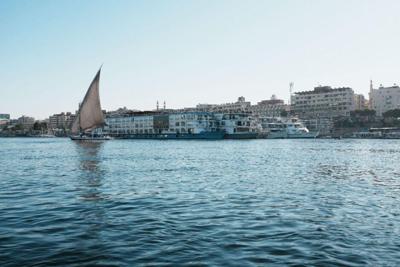
Egyptian royalty as well as 19th-century visitors, including Florence Nightingale, traveled along the River Nile in a special type of wooden sailboat named “dahabiya.” It got its name due to the similarity with golden boats that were owned by the Egyptian aristocracy at times. Dahabiya Nile Cruises are reminiscent of those times but with private bathrooms and air-conditioning added and with a small generator to help on a windless day.
The number of passengers is much smaller in comparison with ordinary cruises, being 8 to 20 people accommodated in 6 to 14 cabins, without any swimming pools, bars, or entertainment programs. All meals take place at a common table, and the daily schedule depends on the speed of the wind and the river flow, not on the schedule planned in advance. The cruise route covers the distance between Esna (to the south of Luxor) and Aswan for 4 to 8 nights.
These vessels may be able to navigate shallower waters and stop at smaller islands or villages that are not included on many larger-ship itineraries. Places like tombs in El Kab and the sleepy riverside village of Gebel el-Silsila are seldom found on the conventional cruise route; however, a dahabiya may include stops at these locations, depending on its itinerary and river conditions.
How to Choose the Right Cruise for Your Trip
The best option generally depends on factors such as preferred pace, group size, and budget, rather than one itinerary being inherently better than another. A standard cruise may suit travelers with limited time, as it can fit easily into a broader Cairo, Luxor, and Aswan itinerary while still allowing time to relax on board and enjoy available evening activities.
A dahabiya cruise can be great for couples, small families, or those who prefer a less crowded space. As the number of cabins per boat is kept to 6 to 14, travelers may want to book several weeks in advance because availability can be limited. Cost is another factor: these cruises typically command higher fares than standard mass‑market sailings, in part because they use smaller ships with fewer cabins and offer a higher crew‑to‑passenger ratio
In general, both types of cruises may include many of the same major temples and archaeological sites, but the main difference is in comfort, number of passengers, and amount of deck time.
When to Sail the Nile
October through April is generally considered a comfortable period for a Nile River cruise, with milder temperatures that may make sightseeing more manageable. Temperatures begin to rise between March and May, particularly in the afternoons, while June through August typically brings the most intense heat. In Aswan, summer daytime temperatures can exceed 104 degrees Fahrenheit.
December and January are often busy travel months, so rooms may need to be reserved several weeks in advance. A Nile cruise can offer a convenient way to visit many of ancient Egypt’s major temples and archaeological sites along the river. Although the sites were built during different periods and are not encountered in chronological order, the route highlights the Nile’s central role in connecting the communities and civilizations that developed along its banks.